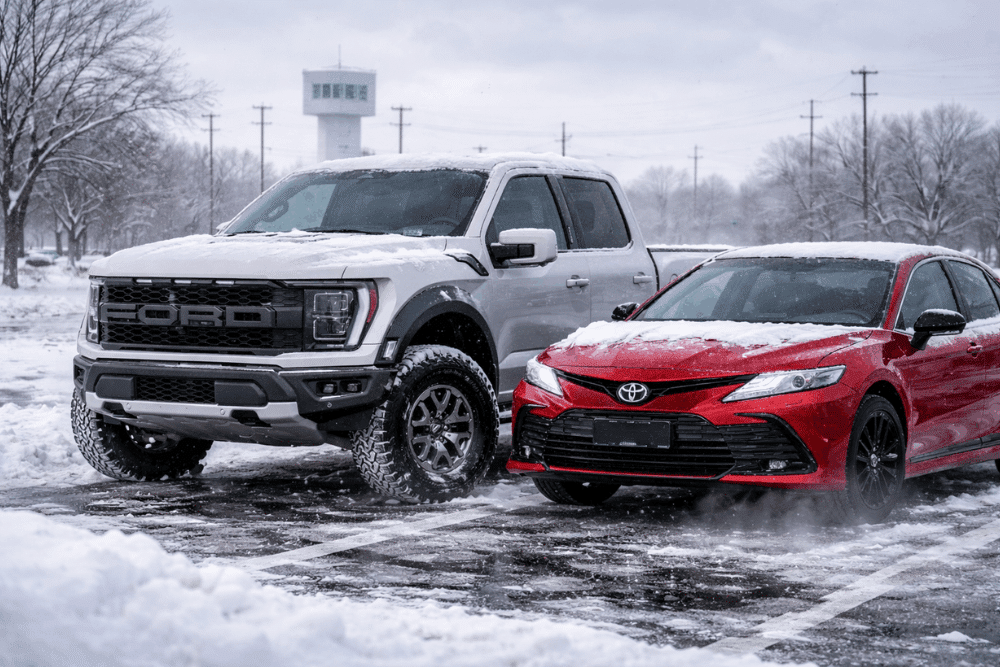
Your vehicle’s country of origin determines exactly how Michigan winter will attack it. Ford trucks battle front suspension corrosion and transmission fluid thickening. Honda and Toyota owners face frozen sensors and fuel system struggles during cold starts. Neither design philosophy is wrong, but each creates specific weak points when Lansing temperatures plummet below freezing. Jerry’s Automotive has served three generations of Michigan families, watching how road salt, freeze-thaw cycles, and sub-zero temperatures expose vulnerabilities in different vehicle architectures.
This comprehensive guide breaks down the engineering differences that matter, compares domestic versus Asian winter failure patterns side by side, explains the mid-winter car maintenance that prevents emergency repairs through the coldest months, and reveals what our Digital Vehicle Inspections show us about protecting your vehicle through the rest of winter.
Why Engineering Philosophy Matters in Michigan Winters
Vehicle manufacturers approach cold-weather durability from completely different angles. American automakers traditionally prioritize heavy-duty capability and payload capacity. Japanese engineers focus on compact efficiency and sensor integration.
Domestic Design Priorities:
- Body-on-frame construction for towing strength
- Heavy-duty suspension components rated for payload
- Larger engine bays with accessible service points
- Robust electrical systems supporting work equipment
Asian Design Priorities:
- Unibody construction for weight efficiency
- Compact packaging maximizing interior space
- Tightly integrated electronics and sensors
- Fuel economy through direct injection technology
These design differences explain why a Ford F-150 develops front-end noise while a Honda Accord throws sensor codes during the same January cold snap.
The Science Behind Cold-Weather Failures
Metal contracts. Fluids thicken. Rubber hardens. Battery chemistry slows down. These physical changes stress every vehicle system simultaneously.
Engine oil becomes 60% thicker at zero degrees compared to normal operating temperature. Battery capacity drops by 35% when the thermometer hits 10 degrees. Your alternator must work twice as hard to recharge a cold battery while powering heated seats, defrosters, and headlights.
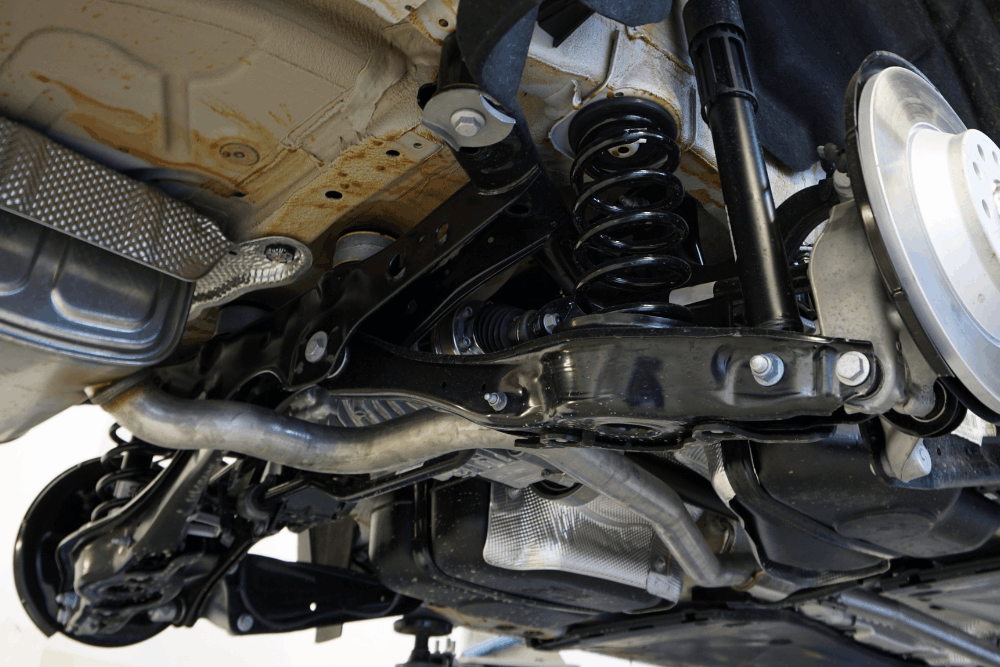
Road salt accelerates everything. Calcium chloride eats through protective coatings on suspension parts, brake lines, and exhaust systems. Michigan uses over 400,000 tons of road salt annually, roughly 80 pounds per resident attacking your vehicle’s undercarriage.
Cold Cranking Reality
Your engine needs 400-600 amps to crank over in summer. That number jumps to 800-1,000 amps when oil turns thick and fuel doesn’t vaporize properly. A battery rated for 650 cold cranking amps only delivers 455 amps at zero degrees. This explains why jump-starts spike every December.
Domestic Vehicle Winter Challenges in Lansing
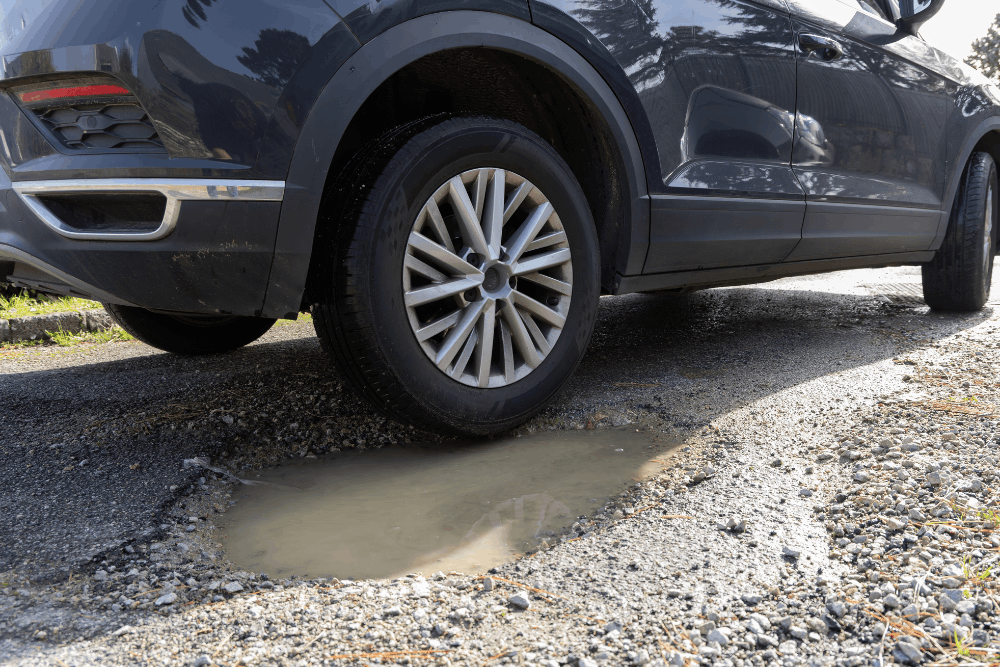
Front Suspension Takes the Beating
Common Failure Points:
- Ball joints: Corrode from road salt penetrating rubber boots
- Tie rod ends: Wear accelerates with freeze-thaw cycling
- Control arm bushings: Crack when rubber hardens in extreme cold
- Sway bar links: Snap under stress from pothole impacts
You’ll hear clunking over bumps or notice steering wander before catastrophic failure occurs. These require maintenance every 60,000 miles in Michigan regardless of driving style.
Battery and Transmission Challenges
Ford’s modern trucks and SUVs draw power constantly. The PCM monitors theft deterrent systems. The radio maintains memory settings. These parasitic drains become devastating when battery capacity drops 35% in cold weather.
Battery Warning Signs:
- Slow cranking on first start of the day
- Dimming headlights at idle
- Clock or radio resetting randomly
- Check engine light for charging system
Automatic transmissions experience delayed engagement when shifting from Park to Drive, harsh shifts during the first few miles, or slipping until warm-up completes. Synthetic transmission fluid helps, but regular service intervals matter more.
Asian Vehicle Winter Vulnerabilities in Michigan
The Sensor Sensitivity Problem
Honda and Toyota pack sophisticated electronics into every cubic inch of engine space. Mass airflow sensors sit inches from cold air intakes. Oxygen sensors thread into exhaust manifolds where condensation freezes overnight.
Typical Sensor Failures:
- Mass airflow sensor: Contaminated by moisture and road grime
- Oxygen sensors: Wiring corrodes from salt spray
- Throttle position sensor: Loses calibration from expansion cycles
- Crankshaft position sensor: Magnetic field weakens in extreme cold
Check engine lights appear suddenly during the first hard freeze. The sensors aren’t defective; they’re responding to environmental conditions outside their optimal operating range.
Direct Injection and Brake System Issues
Modern direct injection technology sprays gasoline directly into combustion chambers at 2,000+ PSI. This struggles during cold starts when fuel doesn’t atomize properly. Carbon deposits on intake valves cause extended cranking, rough idle, or misfires until the engine reaches 140 degrees.
Japanese vehicles favor single-piston floating brake calipers with guide pins that slide during braking. Road salt corrodes these pins rapidly, causing calipers to stick and creating uneven pad wear.
Winter Repair Comparison by Vehicle Type
| Issue Category | Domestic Vehicles | Asian Vehicles |
|---|---|---|
| Primary Winter Failure | Suspension components (ball joints, tie rods) | Electronic sensors (MAF, O2, TPS) |
| Battery Challenges | High electrical loads from accessories | Compact battery location traps cold air |
| Fluid Behavior | Transmission fluid thickening | Direct injection cold start issues |
| Corrosion Areas | Frame rails and crossmembers | Exhaust manifold sensor threads |
| Brake System Issues | Proportioning valve freezing | Guide pin corrosion in calipers |
Concerned about how winter will affect your specific vehicle? Our ASE-certified technicians at Jerry’s Automotive can diagnose potential issues before they leave you stranded. Schedule your winter inspection today at 5544 S Martin Luther King Jr Blvd, Lansing, MI 48911, or call 517-393-7240.
The Preventative Maintenance Advantage
Smart owners anticipate which systems will struggle based on vehicle design and take action to prevent breakdowns during the coldest months of winter.
Mid-Winter Maintenance Checklist:
- Coolant System Inspection: Test antifreeze concentration for protection below negative 35 degrees
- Battery Load Testing: Replace any battery showing less than 500 cold cranking amps
- Brake Fluid Exchange: Remove moisture-contaminated fluid before it freezes
- Cabin Air Filter: Prevent heater core clogs that reduce defrost effectiveness
- Tire Pressure Check: Cold air drops pressure 1 PSI per 10-degree temperature decrease
These aren’t optional services during Michigan winters. They’re engineering requirements for keeping your vehicle reliable when temperatures stay below freezing for weeks at a time.
How We Identify Problems and Document Your Vehicle's Condition
Professional Diagnostics
Professional scan tools read live data from dozens of sensors simultaneously. We see intake air temperature, coolant temperature, battery voltage, fuel trim corrections, and misfire counters in real time. This tells us whether your Honda’s rough idle comes from a failing sensor or carbon buildup, whether your Ford’s starting issue is the battery or starter motor.
Digital Vehicle Inspections
Beyond diagnostic testing, our Digital Vehicle Inspections document your vehicle’s overall condition visually. Photos show corroded battery terminals, cracked suspension bushings, and worn brake components. This transparency eliminates the trust gap between what technicians see and what you understand about necessary repairs. You receive detailed images and videos through our Auto Flow Digital Vehicle Inspection system, so you can see exactly what we see.
Why Jerry's Automotive Understands Michigan Winters Differently
Our third-generation family business has watched Lansing winters test vehicles since 1965. That institutional knowledge matters when diagnosing why your specific vehicle behaves differently in January versus July.
Our Winter Service Advantage:
- ASE Master Technician Certification: Advanced expertise across all major automotive systems, including engine repair, electrical diagnostics, brakes, and suspension
- NAPA Gold Center Status: Access to quality parts with reliable cold-weather performance
- 5-Year/50,000-Mile Warranty: Standing behind repairs through multiple winter seasons
- Digital Vehicle Inspections: Photos and videos explaining exactly what your vehicle needs
- Shuttle Service and Loaners: Keeping you mobile while we work on your car
We explain findings in plain language and prioritize repairs based on safety and reliability. That relationship-based approach has kept families returning to our shop since 1965.
FAQs About Winter Vehicle Repairs in Lansing, MI
Do Japanese cars handle cold weather better?
Japanese cars don’t inherently handle cold weather better than domestic vehicles, but they experience different types of winter failures. Asian vehicles often face sensor and electronics issues due to compact engine designs, while domestic trucks deal more with suspension and heavy-duty component wear. Both vehicle types need winter-specific car maintenance to perform reliably in Michigan’s climate.
What are common Ford truck problems in winter?
Common Ford truck problems in winter include front suspension wear from heavy payloads and road salt, battery drain from increased electrical demands, and transmission fluid thickening that causes delayed shifting. Ball joints and tie rod ends wear faster when exposed to freeze-thaw cycles, while older batteries struggle with cold cranking requirements.
Why does my Toyota have more check engine lights in winter?
Toyota vehicles experience more check engine lights in winter because compact engine designs make sensors vulnerable to moisture and temperature extremes. Mass airflow sensors, oxygen sensors, and throttle position sensors can fail when condensation freezes inside their housings. Aluminum engine construction also creates vacuum leaks during temperature swings.
Should I use synthetic oil in winter for my vehicle?
Synthetic oil provides better cold-weather protection for all vehicle types because it maintains viscosity at lower temperatures than conventional oil. This ensures proper lubrication during cold starts when engine wear occurs most. Modern Ford, Honda, and Toyota engines often require synthetic oil regardless of season, but winter conditions make its benefits especially valuable for Lansing drivers.
How often should I check tire pressure during Michigan winters?
You should check tire pressure weekly during Michigan winters because cold air causes pressure to drop approximately 1 PSI for every 10-degree temperature decrease. Underinflated tires reduce traction on snow and ice while increasing stopping distances. Manual checks catch problems earlier than automatic monitoring systems.
Schedule Your Winter Car Maintenance in Lansing, MI Today
Don’t wait for a breakdown to discover how your domestic or Asian vehicle handles Michigan winters. Our comprehensive winter inspection covers battery health, coolant protection, brake system condition, and all the engineering-specific vulnerabilities discussed in this article.
Whether you drive a Ford truck through construction sites in Holt or commute to East Lansing in a Toyota Camry, our team has the expertise to keep you safe all winter long. Visit Jerry’s Automotive at 5544 S Martin Luther King Jr Blvd, Lansing, MI 48911, or call 517-393-7240 to schedule your appointment. We proudly serve Lansing, East Lansing, Holt, Okemos, Dimondale, and all of Ingham County.